
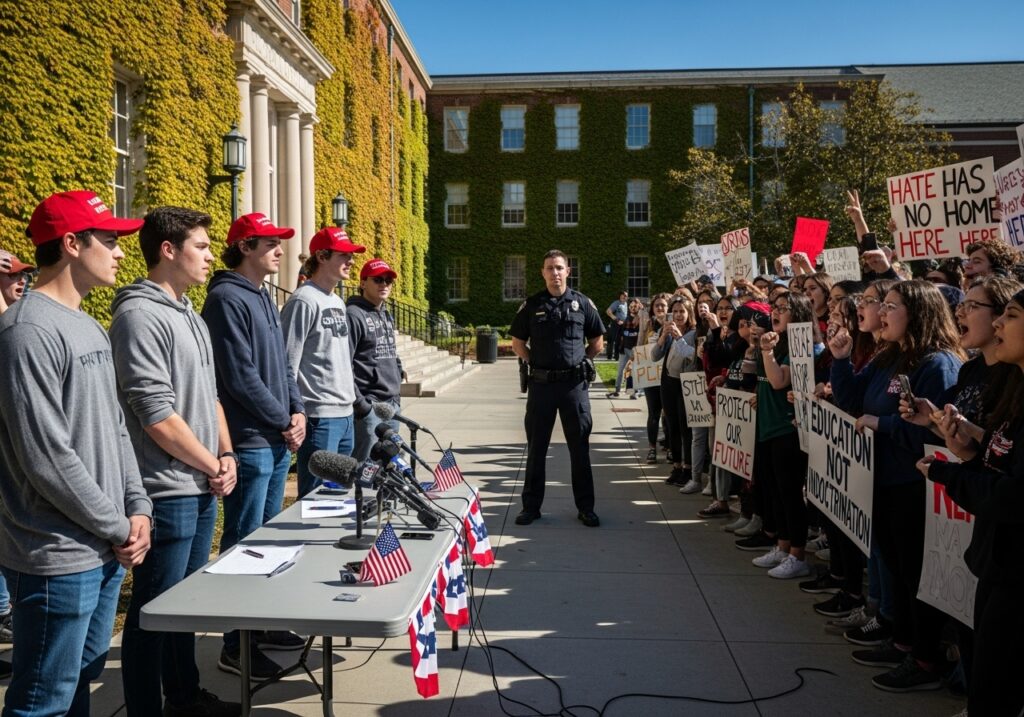
If you ever needed a snapshot of what happens when victimhood becomes currency and common sense gets evicted from campus, look no further than Tennessee State University. Picture this: a group of young white men in MAGA hats—yes, those red fabric kryptonite squares—set up a table for civil debate. You know, the kind of thing that used to be encouraged in universities before they became taxpayer-funded daycare centers for adult-sized toddlers.
These men call themselves the “Fearless Debaters,” and their crime? Inviting people to talk. That’s it. No bullhorns, no marching, no toppling statues or screaming into the void. Just a table, a sign, and a microphone—classic Charlie Kirk and Steven Crowder-style setup. That’s how adults exchange ideas, or at least they used to.
But at TSU, a historically black college, this was apparently too much. Instead of debate, the Fearless Debaters got a mob—a loud, angry group of black students who chose to shout, flip the bird, and steal property instead of engage.
And how did the university respond? By blaming the visitors, of course. TSU officials released a statement that could’ve been ghostwritten by Joy Reid on a Red Bull bender. They scolded the Fearless Debaters for not having a permit—because obviously, the First Amendment only applies if you fill out the right paperwork—and praised their students for supposedly behaving “professionally and respectfully.”
Yes, really. Apparently, flipping people off and knocking over tables is the new standard for “professionalism” in 2025. Next up: looting as a form of non-verbal communication.
Jason Whitlock wasn’t having it. The BlazeTV host called out what everyone with a working brain was already thinking: this was delusion dressed up in administrative jargon. “To argue that these kids—who are stealing things that aren’t theirs, knocking over things that aren’t theirs, flipping people off, shouting them down—‘they acted professionally at all times.’ Are you kidding me?” Whitlock asked.
And let’s not gloss over the fact that TSU is a publicly funded university. You, dear taxpayer, are footing the bill for a campus that treats conservative speech like a hate crime and actual misconduct like a yoga class—something to be encouraged for emotional wellness.
Later, in a follow-up statement, TSU doubled down and labeled the Fearless Debaters a “hostile group.” Hostile? For what—wanting to talk? If white college students swarmed a group of black activists, stole their stuff, and cussed them out, CNN would’ve already built a memorial and MSNBC would be printing shirts.
But here we are. The message is crystal clear: if you’re white, conservative, and dare to speak at a majority-black institution, you’re the problem—even if you behave better than the students. This isn’t just about race or politics; it’s about power. The left has created a culture where being offended is the highest virtue, and being right means nothing if your hat says “Make America Great Again.”
And let’s not miss Whitlock’s deeper point. He blames the matriarchal culture that dominates these institutions—one that favors emotion over reason, chaos over order, and feelings over facts. It’s not about empowering students anymore; it’s about protecting their psychological “safe spaces” from the horror of disagreement.
So what’s next? Will college debate teams need emotional support llamas before facing opposing viewpoints? Will the Constitution be rewritten in crayon?
Or maybe the real question is this: when did we start letting the most fragile voices control the loudest microphones?