
China agreed to cut tariffs on $30 billion worth of American agricultural goods, fish, seafood, logs, wood products, cosmetics, and medical devices. The United States agreed to reciprocal reductions on Chinese small appliances, toys, holiday decorations, and children's car seats.
That's not a trade war. That's a closing statement.
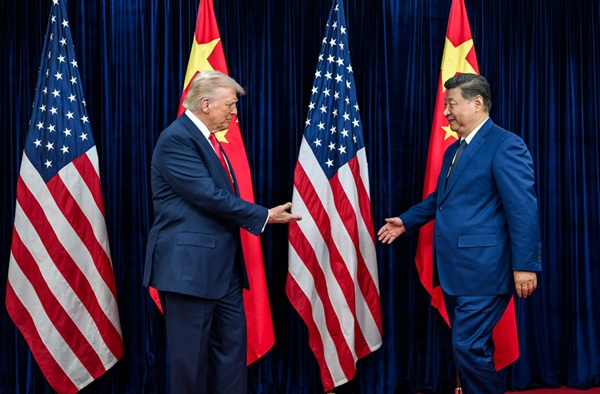
The deal, announced following a 3 day meeting between President Trump and Chinese President Xi Jinping, represents the most concrete de-escalation in the trade conflict since tariffs first started flying. U.S. Trade Representative Jamieson Greer and Treasury Secretary Scott Bessent led the American negotiating side, with U.S. Ambassador to China David Perdue coordinating on the diplomatic end. The White House said the two leaders "discussed fostering peace and prosperity to enhance confidence for businesses and consumers around the world."
Remember when the tariffs were going to destroy the economy? Remember when every cable news economist and editorial board in the country said Trump was starting a catastrophic trade war with no endgame? The endgame just showed up. It's $30 billion wide, and it has China's signature on it.
The details go beyond tariff schedules. China committed to importing 10 million metric tons of American coal annually in 2027 and 2028. The two sides signed a military crisis communication memorandum — the kind of strategic guardrail that every foreign policy establishment figure has demanded for years but couldn't deliver. Beijing agreed to new fentanyl precursor chemical export controls, directly addressing the supply chain that has been killing tens of thousands of Americans annually. And a new agricultural market-access working group was established to keep trade channels open beyond the headline numbers.
Trump described the meeting in characteristically direct terms: "A lot of very positive things happened."
The White House framed the broader relationship as "a constructive relationship of strategic stability" — language that would have been unimaginable six months ago when tariff rates were at their peak and Beijing was retaliating on American soybeans.
The maximum-pressure theory has always been simple: make the cost of not dealing higher than the cost of dealing. Every expert who called tariffs "self-defeating" was evaluating round one of a multi-round negotiation and declaring the game over. China held out through the January 10 trade truce extension deadline. Then held out longer. Then came to the table with $30 billion in reciprocal reductions and a coal import commitment that directly benefits American energy producers.
Not every issue got resolved. Rare-earth minerals and critical minerals access — the leverage point Beijing has guarded most aggressively — remain unresolved. Specific tariff reduction percentages are expected Monday. But the framework is set, and the direction is unmistakable: China is making concessions, not demands.
The same foreign policy class that spent years insisting engagement and multilateral diplomacy were the only path to managing China just watched a bilateral negotiation produce more concrete results than two decades of WTO complaints and politely worded joint communiqués. The difference wasn't sophistication. It was leverage.