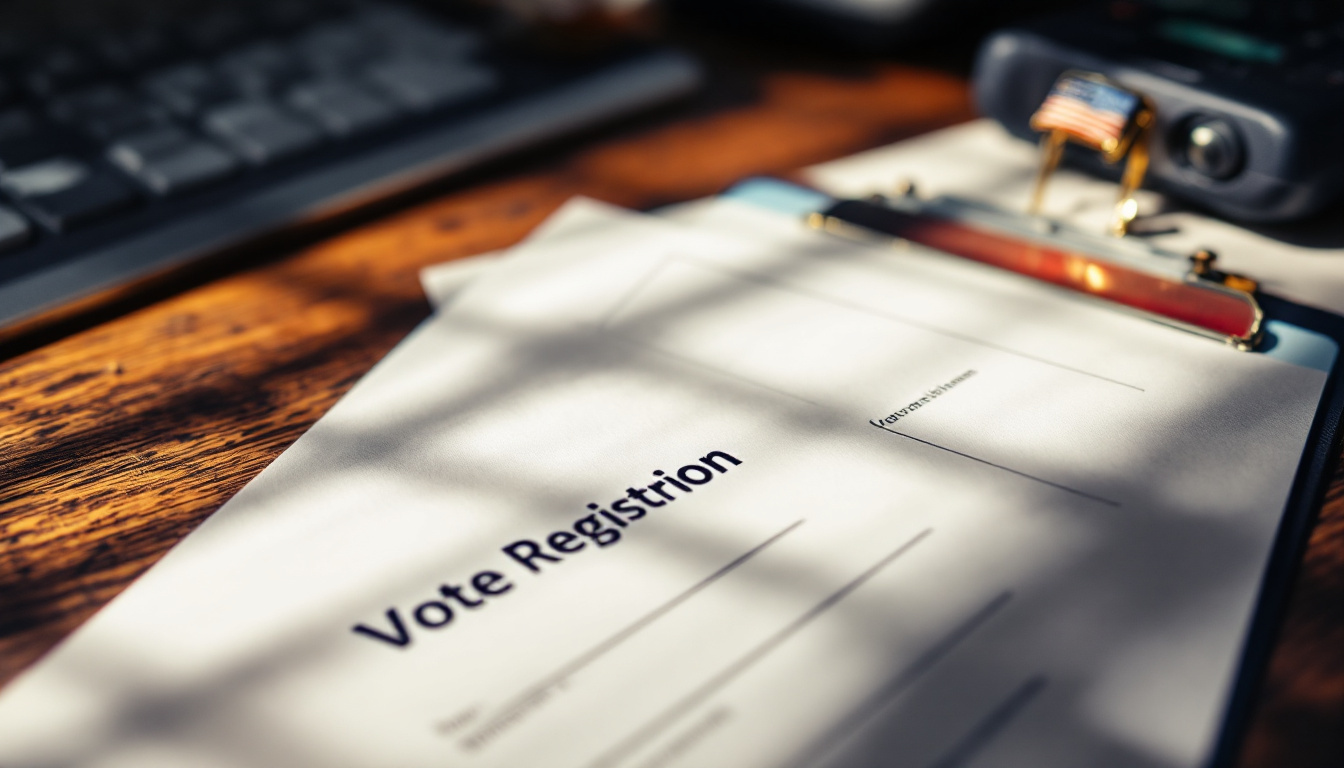
Darwin Rivera Flores, a Honduran national living in California, had a state-issued driver's license and a Social Security number obtained through a visa. What he didn't have was proof of U.S. citizenship. That didn't stop California from letting him register to vote.
He's not alone. He's one of approximately 400,000.
First Assistant U.S. Attorney Bill Essayli, who serves in the Central District of California, laid out the problem in a post on X: "This case really highlights the vulnerability in California's voter rolls," Essayli wrote. "They basically allow anybody to register to vote on the honor system."
At least 500,000 people currently sit on California's voter rolls without having provided any documentary proof of identification whatsoever. No ID. No passport. No birth certificate. Just a form and a checkbox.
Fox News co-anchor Bill Melugin pressed the point during coverage of the story: "There's no one checking this, right? It's entirely the honor system." The answer, evidently, is yes. California doesn't verify. It trusts. It takes your word for it the way a gas station clerk takes your word that the $100 bill isn't counterfeit — except the gas station clerk at least holds it up to the light.
In the Rivera Flores case, the system worked only because federal authorities caught it independently. Rivera had obtained legitimate California documents through his visa status, used those to register, and was charged with illegal voter registration. He never actually cast a ballot, which California will undoubtedly cite as proof that "the system works." The fact that catching one guy required federal intervention while 400,000 others sailed through unchecked — that part gets less emphasis.
Thirty-six states require some form of identification at the polls. California is among the 14 states, plus Washington, D.C., that verify identity through "alternative means" — which in practice means they don't verify much at all. The gap between "we have a process" and "the process catches fraud" is wide enough to park 400,000 unverified registrations in.
California Attorney General Rob Bonta has shown no urgency to address the vulnerability. The state's position has consistently been that voter fraud is rare, that the existing system contains adequate safeguards, and that requiring identification would suppress legitimate votes. It's the familiar playbook: treat every security measure as an attack on access, and treat every breach as an isolated incident.
A DHS spokesperson put the counter-position plainly: "American citizens and only American citizens are electing American leaders." That used to be a statement so obvious it didn't need saying. In California, it's apparently a controversial policy stance.
The midterms are weeks away. California's congressional races include some of the most competitive districts in the country. And the state's voter rolls contain a population roughly the size of Cleveland that nobody bothered to verify.
Four hundred thousand is not a rounding error. It's not a procedural hiccup. It's a number large enough to swing House seats, and it exists because one state decided that asking people to prove who they are before they choose who governs is too much to ask.