
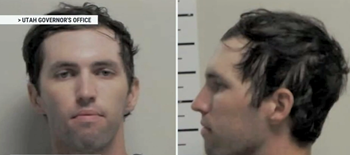
The man accused of assassinating Charlie Kirk with his grandfather's rifle hasn't even entered a plea yet. But his defense team is already working overtime — not to prove his innocence, but to make sure the worst possible consequence disappears before the trial starts.
The strategy? Claim prosecutors violated a gag order, and argue the death penalty should be stripped as punishment.
Tyler Robinson stands accused of gunning down the conservative activist in Utah last year in what remains one of the most shocking political assassinations in modern American history. The case is still in pre-trial proceedings, and Robinson has not entered a plea. But as Just The News reported, his lawyers have filed to have a Utah judge eliminate the death penalty as a sentencing option entirely — framing it not as a constitutional argument or a mercy plea, but as a sanction against prosecutors for allegedly talking about the case outside the courtroom.
The supposed violation centers on the ballistics evidence. Robinson's defense team had publicly claimed that ATF testing on the bullet fragment recovered from Kirk could not be connected to the rifle — his grandfather's rifle, which prosecutors have identified as the suspected murder weapon. Prosecutors pushed back on that characterization, calling the defense's claims "misleading."
Here's what the ATF testing actually found: the bullet fragment analysis was inconclusive. But the caliber of the round and the spent casing matched Robinson's grandfather's rifle. That's a distinction the defense would rather you not think too hard about. "Inconclusive" on fragment matching is not the same as "exonerated by the evidence," no matter how many times a defense attorney squints at the phrasing.
Prosecutors maintain they did not breach the gag order or violate any court rules. Their position is straightforward — when the defense makes public statements mischaracterizing forensic evidence, correcting the record is not a violation. It's an obligation.
The defense, naturally, disagrees. Their argument boils down to this: prosecutors spoke publicly about the case, that constitutes a gag order violation, and the appropriate remedy is to take capital punishment off the table forever. Not a fine. Not a reprimand. Not a stern letter from the judge. The ultimate sentencing option, gone — as a procedural penalty.
It's a legal maneuver that has nothing to do with whether Tyler Robinson killed Charlie Kirk and everything to do with ensuring the consequences stay manageable if a jury says he did. Defense attorneys get paid to try these things, and sometimes judges let them work. That's the system.
But zoom out for a second. A young conservative leader was shot and killed. The accused assassin's own family weapon is forensically linked to the crime by caliber and casing. And the pre-trial fight isn't about what happened — it's about whether prosecutors talked too much while correcting a mischaracterization of the evidence.
We spent years watching political violence get hand-waved as "the temperature of the times." Congressional baseball shootings, assassination attempts, now this. The pattern isn't complicated. What's complicated is watching a legal team try to convert a gag order technicality into a permanent ceiling on accountability.
The trial hasn't started. No plea has been entered. The death penalty question should be decided by the facts presented to twelve people in a jury box — not by a pre-trial motion about who said what to a reporter.