
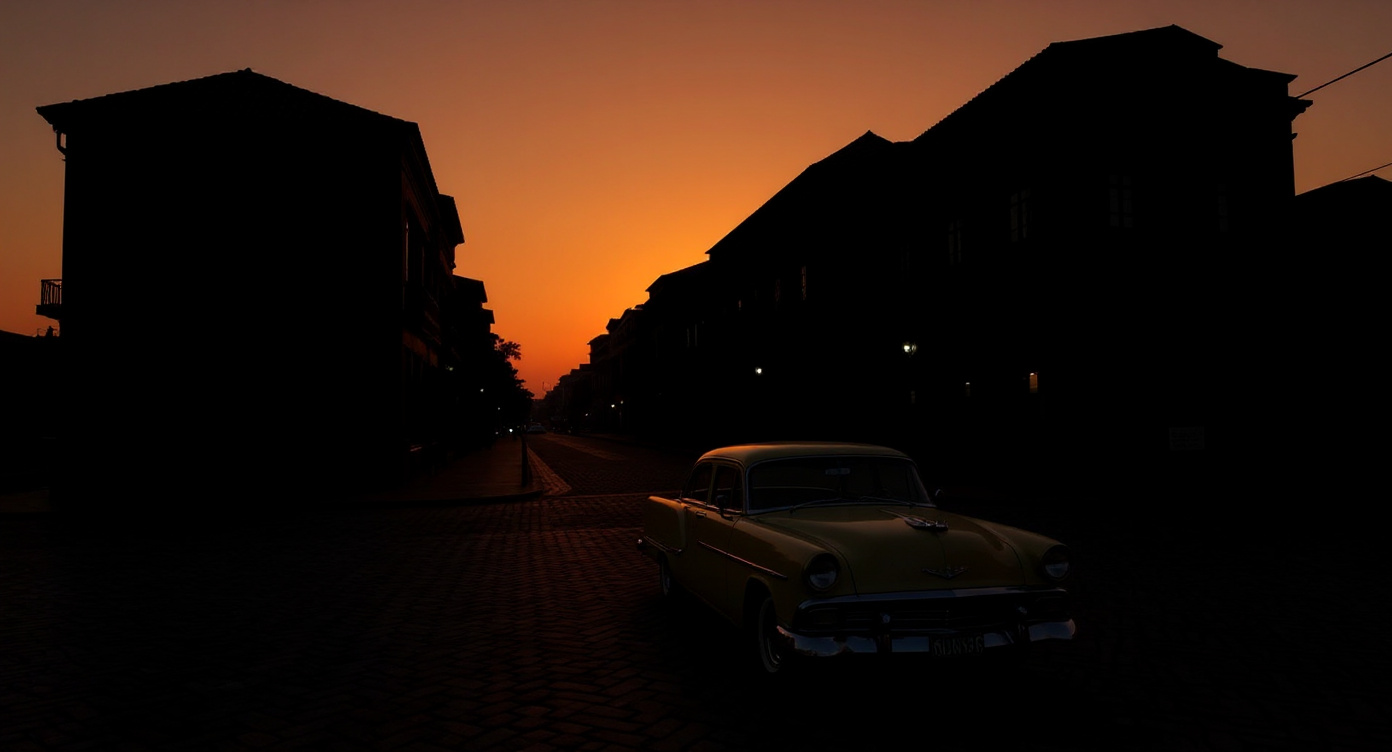
On July 6, Cuba's electrical workers' union issued a statement that should be printed on a bronze plaque and mounted outside every Marxism department in America: "A total disconnection of the National Electric Power System is occurring. The causes are being investigated."
The causes are being investigated. It's been sixty-seven years. Take your time.
The entire island lost power — not a neighborhood, not a province, the whole country — while Raúl Guillermo Rodríguez Castro, grandson of the man who started this catastrophe in 1959, was busy telling USA Today that he'd like to sit down with President Trump and hash things out. "I can negotiate with anyone designated by the U.S.," the younger Castro said in an interview published in June. "If given the opportunity, claro que con Trump."
That's Spanish for "of course with Trump." Which is something you say when the alternative is governing a country that can't keep a light bulb on.
The grandson has spent most of his life as a shadow figure in Cuba's communist ruling circle, and he's been careful to frame himself as reluctant royalty. "I've never been interested in politics," he told USA Today. "It's never been a calling of mine." He then immediately added: "But if at some point the revolution needs me to step up, I will do it."
So he's not interested in politics, except when politics needs him. That's a campaign speech with a disclaimer stapled to the front.
Meanwhile, the numbers tell the story the regime would rather you not hear. Cuba welcomed just 360,000 tourists in the first five months of 2026 — a 58 percent decrease compared to the previous year. The Dominican Republic, sitting right next door in the same Caribbean water with the same beaches and the same sunshine, drew ten times that number over the same period. Same geography. Different economic system. Different result.
CIA Director John Ratcliffe has been closely watching the island's deterioration, and the grid collapse is only the latest in a pattern of infrastructure failures that communist central planning has produced for decades. The electrical system doesn't fail because of hurricanes or bad luck. It fails because nobody in a command economy has any incentive to maintain it.
The regime's defenders will point out that U.S. sanctions have strangled Cuba's ability to import parts and fuel. That argument had some weight twenty years ago. But the Dominican Republic manages just fine under the same regional conditions, the same global supply chains, the same hurricane belt. The variable that changes is the system. One country lets people own things and build businesses. The other one doesn't.
What makes this moment different from the usual Cuban blackout story is the Castro name re-entering the conversation. A grandson of Fidel publicly signaling that he's open to negotiating with a sitting American president isn't a casual media appearance. That's a trial balloon — testing whether Washington is interested, and whether Havana's hardliners will tolerate it.
The revolution promised electricity, literacy, and dignity. Sixty-seven years later, the literacy programs are propaganda mills, the dignity is gone, and the electricity just failed for the entire country in a single afternoon.
A Castro is ready to talk. The grid provided the opening statement.