
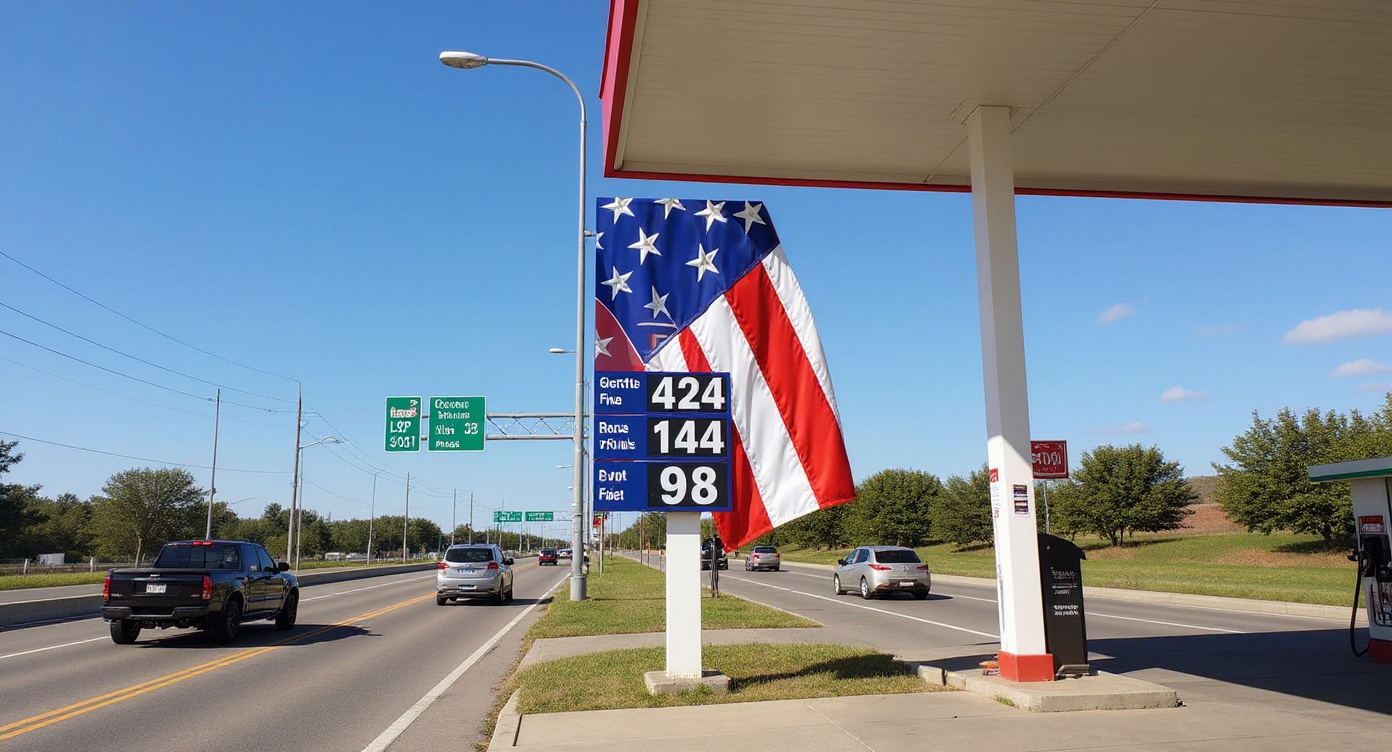
Piper Sandler's proprietary Daily Confidence Survey just recorded what the firm's chief economist is calling a "big bounce." Not a modest uptick. Not a statistical blip. A bounce — driven almost entirely by plummeting gasoline prices hitting the wallets of the consumers who needed it most.
The same Wall Street that spent two years predicting a Trump-era economic catastrophe is now charting the recovery.
Nancy Lazar, Chief Global Economist and head of the economics research team at Piper Sandler, published the findings on June 22. "The steep rollover in gasoline prices triggered a big bounce in PSC's Daily Confidence Survey last week, with low-end consumers particularly more cheerful," Lazar wrote. That last part matters. Low-end consumers — the ones who actually feel gas prices in their monthly budgets — are leading the sentiment shift.
The data runs through Rasmussen Reports, which conducts the high-frequency consumer sentiment gauge for Piper Sandler. And it's not just vibes. "With all daily survey components improving, the observed retail sales aggregate has hooked up," Lazar noted. Translation: people aren't just feeling better. They're spending again.
Lazar acknowledged the recent headwinds directly. "Higher prices weighed on consumers last quarter, according to Kroger & La-Z-Boy," she wrote — two companies that serve as reliable barometers for everyday American spending. When Kroger says consumers pulled back, that's grocery-aisle reality, not an economic model. But the firm's gauge "appears to have bottomed, mirroring the sharp rollover in gasoline prices — adding to economic tailwinds from refunds and healthy labor."
The timing is not a coincidence. Gas prices have been falling as Strait of Hormuz shipping traffic normalizes — a development directly connected to the Trump administration's pressure campaign on Iran. When tanker traffic flows freely, global oil supply stabilizes, and the price at your local Shell station drops. That's not abstract geopolitics. That's your Tuesday fill-up costing fifteen bucks less than it did in April.
"The impact of easing pump prices is clear in both confidence and consumption," Lazar wrote. She also pointed to market signals confirming the trend: "The Russell 2000 and XRT retailing ETF certainly act as if the bottom is in for confidence." Small-cap stocks and retail funds don't rally on hope. They rally on cash registers.
The critics will point out that one quarter of falling gas prices doesn't constitute a permanent economic shift — and they're right, technically. But they were also technically right when they said tariffs would cause a recession, interest rates would crater the housing market, and consumer spending would collapse by Q2. None of that happened. What happened instead is that an administration leaned on energy policy and foreign pressure to bring costs down, and the consumer responded exactly the way consumers always respond when they have more money in their pockets.
With 136 days until the midterm elections, the political implications of a sustained confidence bounce aren't subtle. Incumbents don't lose when gas is cheap and retail spending is climbing. That's not a partisan observation. That's every election since 1980.
Gas goes down. Confidence goes up. Spending follows. Kroger and La-Z-Boy already see it. Wall Street already charted it.
The only people still pretending it isn't happening are the ones who bet against it.