On September 30, Georgia's State Election Board voted 3-2 to ask the Trump Department of Justice to declare the state's Dominion Democracy Suite 5.5-A voting system unlawful under federal law — specifically the Help America Vote Act, 52 U.S.C. § 21081 — and to begin a six-month phase-out before the machines touch another ballot.
The man blocking the effort is the same one who certified the 2020 results.
Secretary of State Brad Raffensperger's spokesman Robert Sinners called the resolution "unserious," adding that "people who are serious about election security don't inject chaos." That's the line from the office that oversaw QR-code ballot machines with CISA-documented vulnerabilities and a privacy flaw researchers named DVSorder.
Board member Janelle King framed the DOJ request plainly. "What we're asking the DOJ to do is to come in and support us," she said. The resolution was directed to Attorney General Todd Blanche, Assistant Attorney General Harmeet Dhillon, and Homeland Security Secretary Markwayne Mullin.
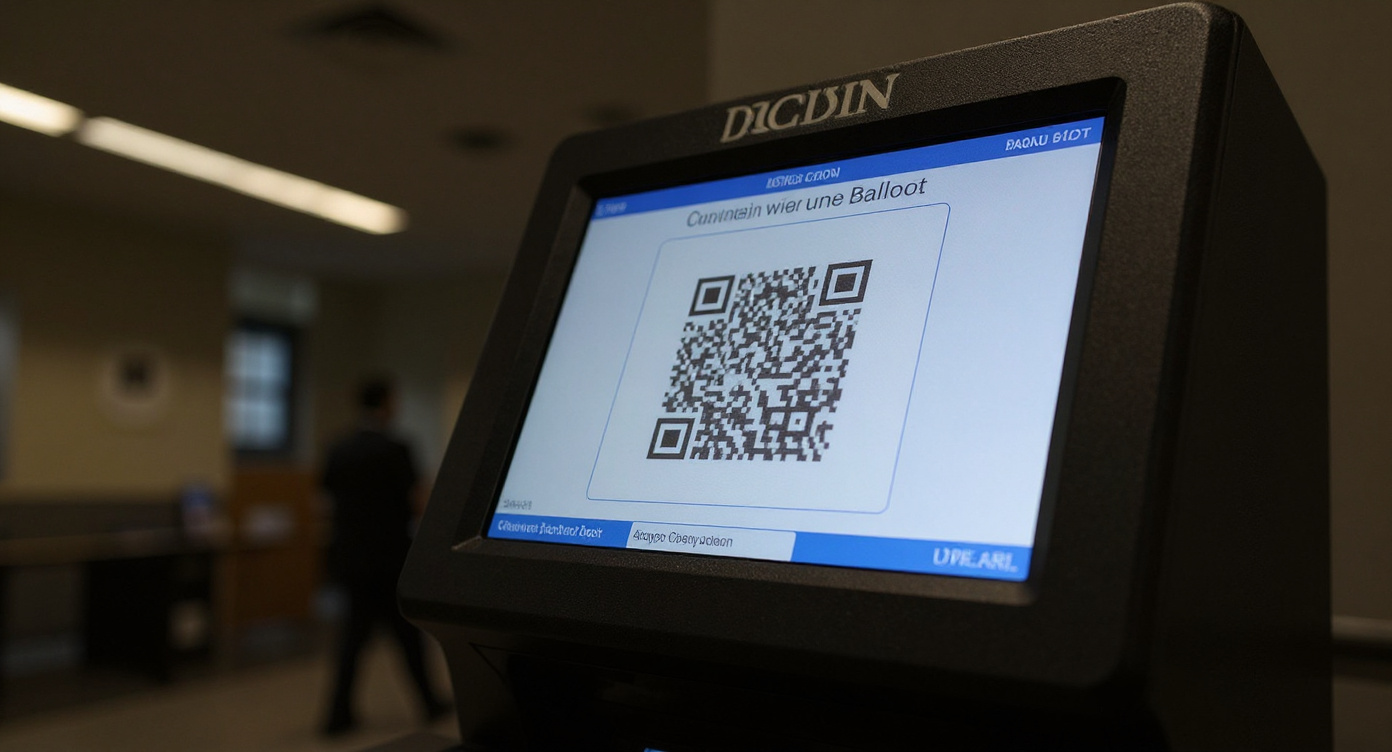
The core issue isn't theoretical. University of Michigan professor J. Alex Halderman has documented specific vulnerabilities in the Dominion system — the same system running on EAC-certified software versions 5.17 and 5.20. Georgia law under O.C.G.A. § 21-2-379.23(d) already addresses voting system standards. The Board's resolution argues the QR-code tabulation method — where a machine-generated code determines vote counts rather than human-readable marks — violates both state and federal requirements.
Executive Director James Mills drafted the resolution calling for elimination of "unreadable, unverifiable QR-code-based vote tabulation and any other electronic" method that prevents voters from confirming their selections were recorded accurately.
GOP appointee Carolyn Roddy voted in favor and didn't mince the reasoning. "It's irresponsible to have all of us voting on machines that we know have known vulnerabilities," she said.
The 3-2 split fell along predictable lines. Democrat-aligned member Sara Tindall Ghazal voted against. Chairman John Fervier, a Governor Brian Kemp appointee, also voted no, citing "a fundamental issue with the federal government becoming involved in Georgia elections." The same state government that can't fund its own transition — the resolution noted a $30 million funding shortfall, with only $15 million requested in 2025 — now objects to federal involvement on principle.
Raffensperger's office has until October 13 to respond formally. The resolution sets a target deadline of January 1, 2028 for full phase-out, but the ask to the DOJ is about the midterms bearing down on November. Weeks away. Dominion machines still in every precinct.
The Curling case — the long-running federal lawsuit challenging Georgia's voting machines — established the factual record that the Board's resolution now cites. Years of litigation produced expert testimony about specific vulnerabilities. The Board isn't speculating. They're reading the court file.
Georgia's election board voted to fix the machines. Georgia's Secretary of State is fighting to keep them. The midterms are in five weeks.