
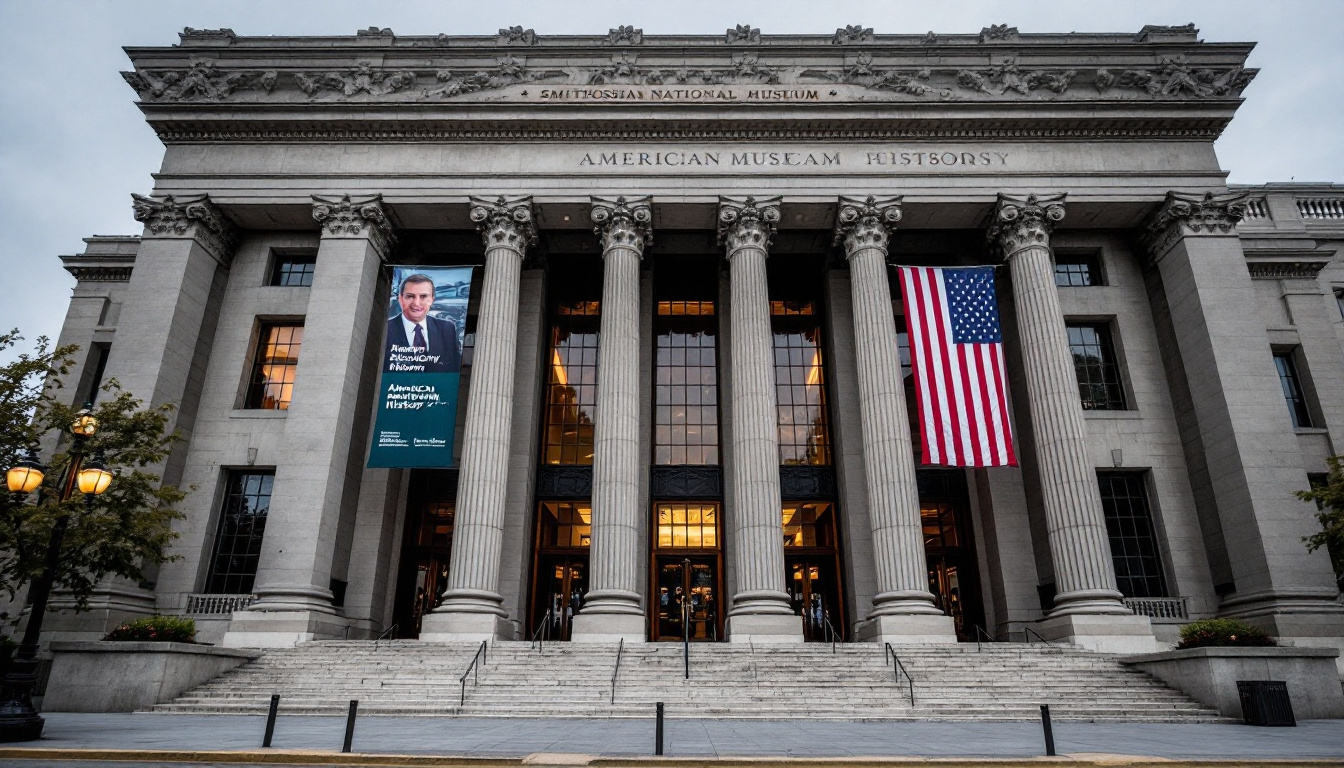
Dr. Jody Edward Ginn, a historian and museum professional from Texas, walked into the Smithsonian's National Museum of American History for the first time since 2012. What he found wasn't the institution he remembered. The exhibits had been overhauled, the mission had been rewritten, and the building now functioned less like a museum and more like a campus activism center with better lighting.
"It's a completely different place than when I was there in 2012," Ginn said.
The transformation wasn't subtle. According to Ginn, the museum's shift from education to political advocacy is visible from the moment you walk through the doors. "From the moment I walked in, it's a very different experience," he said. The exhibits now "specifically direct" visitors "to action" — not to reflection, not to understanding, but to predetermined political conclusions the curators have already reached for you.
In 2017, the museum world produced something called the MASS Action Toolkit, a document that explicitly referenced Ferguson and Black Lives Matter as inspirations for reimagining what museums should do. The toolkit's stated goal was to "turn museums from institutions of education into institutions to encourage activism." That's not a conservative's paranoid interpretation. That's what the document says.
Ginn's assessment of the people now running these institutions was blunt. The staff aren't "scholars of history," he said. "They're activists." And the museum's own leadership seems to agree with that characterization, even if they'd frame it differently. Anthea Hartig, the Director of the National Museum of American History, said in a 2024 presentation to students that she removed "American history" from the museum's mission statement because of what she called an "America First" mentality. The director of the National Museum of American History thinks "American history" is a phrase that needs to be scrubbed from her own mission.
Among the exhibits Ginn flagged was one called "Illegal to Be You: Gay History Beyond Stonewall." Rep. Tim Burchett, Republican of Tennessee, raised separate concerns about exhibits displaying "pictures of bondage" and "overtly sexual things" — material accessible to any child whose parents thought they were visiting a history museum.
Ginn said "the biggest problem is in what they leave out." That's the mechanism. You don't have to fabricate history when you can just edit it. Omit the founding principles that complicate the narrative. Skip the parts of the American story that don't support the sermon. Present what remains as the whole truth and then direct your visitors toward the approved political response. It's not education. It's curation in the service of ideology, funded by the American taxpayer.
The 2017 MASS Action Toolkit didn't leak. It was published. These aren't people hiding what they're doing. They're proud of it.
Ginn said he's "not hopeful" about institutional change.
That's not a building that lost its way. That's a building that found a new one.