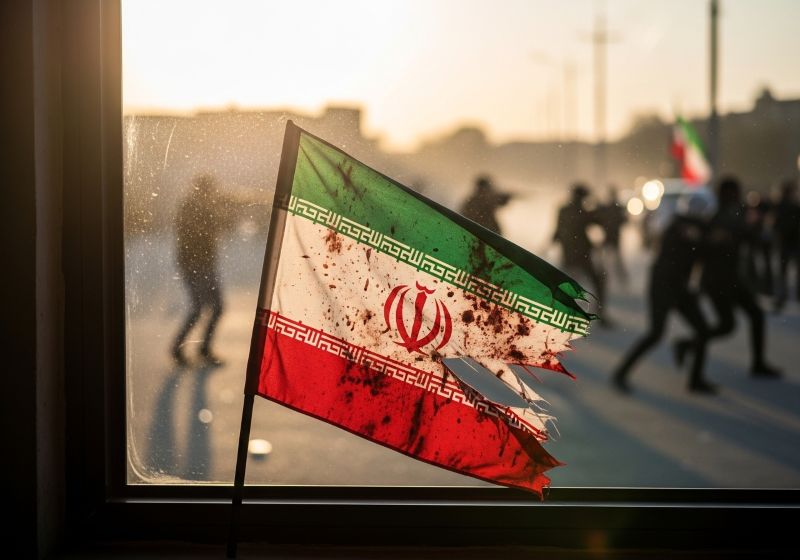
Picture this: as Iranian security forces fire live rounds into crowds of unarmed protesters, Tehran’s top brass quietly picks up the phone… and dials Washington. That’s not a plot twist from a political thriller—it’s the real-life desperation move from a regime hanging by a thread.
While Iran’s streets run red with the blood of over 1,000 civilians, its leaders are suddenly very eager to “talk nukes” with President Trump. That’s what happens when a pressure campaign actually works.
Speaking aboard Air Force One, Trump didn’t mince words. Iran “called yesterday,” he said on Saturday, and now “wants to negotiate.” A meeting is in the works.
Let’s pause and appreciate the timing: the same weekend Iran is trying to silence its own people with bullets and blackouts, it’s also begging the U.S. for a nuclear lifeline. That’s not diplomacy—that’s panic.
And why are they panicking? Because Trump’s “maximum pressure” strategy has done what generations of Ivy League diplomats, State Department fog machines, and Obama-era apologists couldn’t: it’s breaking the spine of the regime. The Iranian economy is in freefall. The protests have spread to 585 locations. Over 10,000 arrests. Internet blackouts. This is not the confident, chest-thumping Tehran of the Obama years. This is an empire of mullahs facing the rising tide of their own people—and realizing the Americans aren’t bluffing anymore.
? BREAKING Iran has CALLED President Donald Trump. A meeting is being set up. And Trump makes it clear nothing is off the table.
“The leaders of Iran are tired of being beat up by the United States. Iran wants to negotiate. Yes.”
“But we may have to act because of what’s… pic.twitter.com/tlXgMk7nMY
— ???? Barron Trump ?? (@BarronTNews_) January 12, 2026
Let’s put this in context. When Obama was in office, his team was busy sending pallets of cash to Tehran and Biden only aided the regime’s bad behavior by trying to re-establish the Iran Nuclear deal that allowed them to covertly continue building nuclear materials. The result? Enriched uranium, regional terror, and a regime emboldened to crush dissent with impunity. Now, under Trump, the regime is suddenly sending out diplomatic smoke signals while trying to cover up its massacre. The contrast couldn’t be sharper.
Trump’s warning couldn’t be clearer either: if Iran retaliates, if they go after U.S. bases or keep killing their citizens, “we will strike them at a level they have never experienced before.” That’s not saber-rattling—that’s what deterrence looks like when it’s backed by actual resolve. And no, he’s not talking about boots on the ground. He’s talking about high-impact, high-precision consequences that make Tehran think twice before firing another round into a crowd.
And while the Biden-era foreign policy crowd would be sending “strongly worded letters,” Trump is talking Starlink. Yes, Elon Musk’s satellite network could be deployed to pierce Iran’s internet blackout and give the protesters their voice back. Imagine that: the same administration that used to be mocked for being “too unconventional” is now considering using private sector tech to fight tyranny and a radical regime. Innovation meets intervention—without a single drone strike.
More importantly, this moment exposes the raw hypocrisy of the media and the global Left. When Trump walks away from the Iran deal, he’s painted as reckless. When he destroys their nuclear infrastructure or supports Iranian protesters, he’s “provocative.” But now, with Tehran crawling back to the table, who’s really holding the cards?
Here’s what’s really happening: the regime fears its own people more than it fears Trump. And that’s exactly how things should be. No more appeasement. No more begging terrorists to behave. Just a clear choice: stop the killing, abandon the nukes, or face consequences you won’t recover from.
The national security team is meeting this week to decide the next move. Diplomatic talks are on the table. So are cyber operations, visible military deployments, and yes, the kind of pressure that doesn’t get reversed with an election cycle.
The real question isn’t what Trump will do. The question is: what happens when the regime realizes he means it?