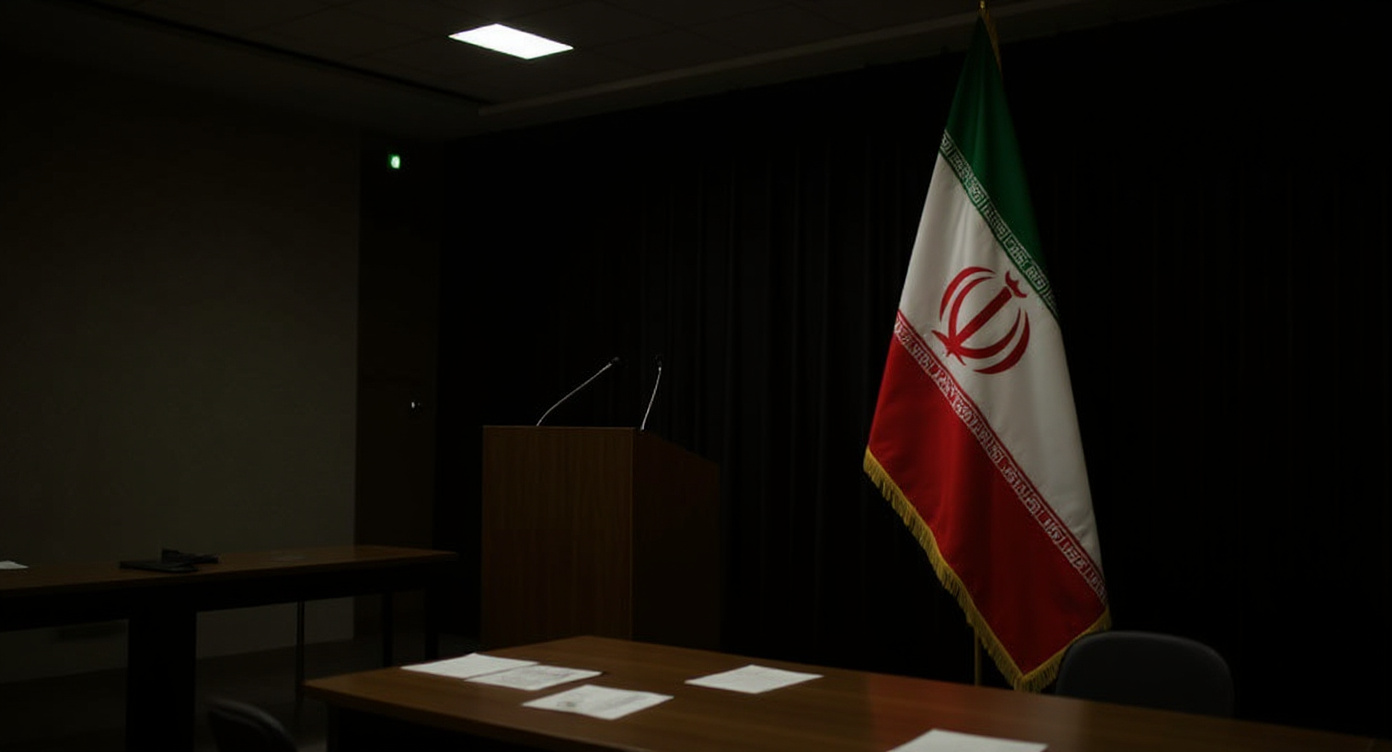
The Islamic Revolutionary Guard Corps — a designated terrorist organization — sat down, drafted a 26-page letter, and mailed it to American scholars, students, and media outlets on September 29. The subject line, essentially: please vote against Donald Trump's party on November 3.
The mullahs are doing Democrat campaign outreach now. Pro bono.
The letter, reproduced by Iran's Tasnim News Agency, described the United States government as "in decline" and urged Americans to use "the power to change it at the ballot box." IRGC spokesman Hossein Mohebbi's organization didn't bother with subtlety. They wrote directly to the American public, through the institutions they assumed would be sympathetic — academia and the press — and told them to reject the party in power.
The timing is worth noting. Iranian Foreign Minister Abbas Araghchi has been scrambling through back-channel talks via Qatar, pitching a "seven-day plan" for the Strait of Hormuz as the October 1 sanctions deadline bears down. Iran's currency is in free fall — the U.S. dollar topped 2.5 million rials on the free market this week, with the euro hitting 2.8 million and the British pound crossing 3.3 million rials. The regime is getting squeezed from every direction, and their diplomatic play is to write a term paper begging American voters to bail them out.
There's a pattern here that the legacy media will work very hard to ignore. Foreign adversaries don't issue public statements about American elections unless they have a preference. Russia supposedly buying Facebook ads in 2016 consumed three years of congressional hearings, a special counsel, and roughly forty thousand cable news segments. Iran's Revolutionary Guard — not a troll farm, not a bot network, an actual designated terrorist organization — publishes a 26-page document explicitly asking Americans to vote against Republican candidates, and the coverage will be a fraction of that.
The difference, of course, is directional. When a foreign interference narrative can be aimed at Trump, it gets the full treatment. When the interference plainly benefits the other side, it becomes a one-day curiosity.
Congressional Democrats who spent years warning about foreign election meddling have been conspicuously quiet. No calls for investigations. No hearings scheduled. No statements from the same committee chairs who once treated a handful of Russian-linked social media posts as an existential threat to democracy. A terrorist organization publicly campaigning for their preferred electoral outcome apparently doesn't meet the threshold.
Maximum pressure works precisely because it makes regimes desperate enough to do things like this. Iran isn't writing love letters to American voters because sanctions are failing. They're writing them because sanctions are succeeding — and the only relief valve they can imagine is a friendlier Congress.