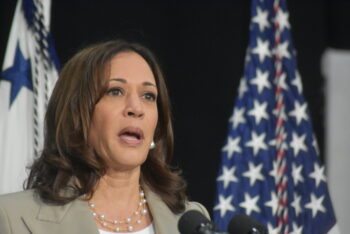
Kamala Harris didn’t just lose her 2024 run for president. She left behind a flaming wreck of a campaign, a $20.5 million debt crater, and a Democratic National Committee desperate enough to cut a backroom deal to make the mess disappear. According to a report quietly dropped by the New York Times, Harris and the DNC struck a secret “handshake deal” to cover her campaign’s unpaid bills—without telling the small-dollar donors footing the bill.
This wasn’t a bailout. It was a shell game.
The arrangement worked like this: the DNC absorbed Harris’s campaign debt, allowing her to claim—technically—that she ended her failed run debt-free. In return, she agreed to raise the money to “make the party whole.” Translation: Harris would hit up donors under the guise of funding the next election fight, while quietly using their cash to pay off the ghosts of 2024.
The scam was simple, if not exactly elegant. Nearly 100 fundraising emails went out in Harris’s name this year, all begging for money to “defeat Trump,” “defend democracy,” and “win the future.” Nowhere did they mention the real purpose: bailing out Kamala’s burned-out, billion-dollar disaster of a campaign.
It’s a bait-and-switch aimed squarely at the party’s true believers—the small donors who think they’re buying yard signs and voter outreach, not settling old debts from a candidate who couldn’t survive the primaries.
Strategically, Harris is trying to salvage more than just her finances. She’s propping up her political relevance. After being humiliated by Trump and pushed out of the race early, she’s clinging to the DNC as her last institutional lifeline. Paying off her debt through party fundraising keeps her looking viable, keeps her name in the inbox, and keeps her on the inside track for whatever scraps of influence are left in the post-2024 Democratic wasteland.
The DNC, meanwhile, is playing a dangerous game. Its cash-on-hand has dropped from $22.1 million at the start of the year to just $13.9 million by August. That’s a slide the party tried to mask with rosy talk of “record grassroots fundraising.” But now we know why the math didn’t add up: they weren’t building for 2026—they were plugging the hole Harris left behind.
It’s a sign of just how bad things are inside the Democratic machine. The DNC is so hollowed out they’re funneling resources into covering for failed candidates just to keep the illusion of party unity alive. Behind the curtain, they’re shaking the tin can and considering lines of credit just to keep the lights on.
Compare that to the Republican National Committee, which entered August with a healthy $84.3 million war chest. Trump’s return to power has energized the GOP base, and the RNC has turned that momentum into cash. Meanwhile, the Democrats are stuck cleaning up the mess of a campaign that burned through $1.5 billion in just 15 weeks and produced nothing but a loss.
Harris’s team naturally tried to put a bow on the whole thing. Her senior adviser called her “committed to building a strong, resilient Democratic Party.” In reality, she’s just trying to pay off the credit card without admitting she maxed it out in the first place.
Even campaign finance watchdogs, usually eager to pounce on GOP infractions, are downplaying the whole affair. One expert called it “not completely forthright,” but shrugged it off as just another exploitative campaign tactic. Translation: business as usual.
This wasn’t just about money. It was about optics, control, and survival. Harris gets to pretend she exited gracefully. The DNC gets to paper over its financial rot. And the donors? They get played.
What’s most revealing is how little outrage this triggered in Democratic circles. No resignations. No apologies. Just more spin, more emails, and more of the same. The Democratic establishment isn’t reforming. It’s retrenching—circling the wagons around the same insiders who led them off the cliff.
In the end, this deal wasn’t about helping Harris. It was about protecting the facade. And if a few million grassroots donors have to be misled to keep the machine running, well—that’s just politics.