
Abdul El-Sayed, the Michigan Democrat and former gubernatorial candidate who's been positioning himself for another run at elected office, once wrote an essay describing breast cancer research funding as a reflection of "social power and privilege" rather than medical necessity. He called it the "pink ribbon lobby."
Laura Ingraham, who survived breast cancer, read it.
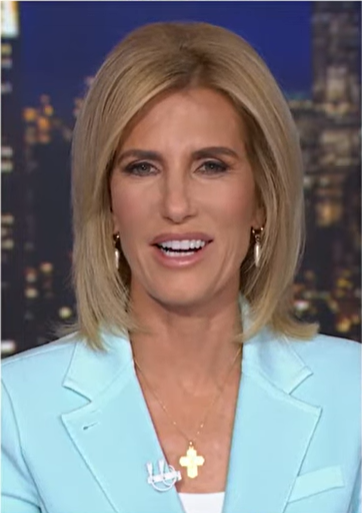
"This is personal," the Fox News host said on her show this week, before laying out the numbers El-Sayed apparently considered a privilege exercise. Breast cancer is the second-leading cause of cancer death among American women. About 1 in 43 women will die from it.
"This is not some academic exercise," Ingraham said.
El-Sayed's essay framed the outsized funding for breast cancer research not as a rational response to a disease that kills tens of thousands of women every year, but as evidence that certain groups wield more political influence over medical research dollars than others. The women getting mammograms, the survivors wearing pink, the families who lost mothers and daughters and sisters — in El-Sayed's framing, they weren't advocates. They were a lobby.
The essay resurfaced this week as El-Sayed continues building his political profile in Michigan, and Twitchy reported on the backlash that followed Ingraham's segment. Social media lit up with responses from women who've lived through the diagnosis El-Sayed reduced to a power dynamic. "I know many women who have had or have breast cancer," one commenter wrote. "I can guarantee El-Sayed that they are not 'privileged.'"
There's a particular kind of academic arrogance required to look at a disease that affects roughly one in eight American women over a lifetime and conclude the real story is who gets research dollars. It takes a specific worldview — one where everything, including cancer, is sorted into oppressor and oppressed. Breast cancer doesn't check demographics before it metastasizes. It doesn't care about your intersectional framework.
El-Sayed, who holds a medical degree and a doctorate in public health from Columbia and Oxford, positioned himself as a progressive health policy expert during his 2018 gubernatorial primary. Chuck Schumer's PAC backed him. The credentials are real. The judgment is the problem. A physician-turned-politician looked at women dying of cancer and saw a case study in privilege theory.
Ingraham's response landed precisely because she didn't need to construct an argument. She just stated what happened to her, stated what El-Sayed wrote, and let the gap between reality and theory do the work. A woman who had cancer talking to a man who had opinions about cancer funding. The audience didn't need a moderator.
The "pink ribbon lobby" framing tells you everything about how a certain class of progressive thinker processes the world. A disease isn't a disease. A funding response isn't a funding response. Everything is a power structure to be deconstructed, even when the people inside that structure are undergoing chemotherapy.
About 1 in 43 women will die from breast cancer. El-Sayed called their advocates a lobby.