
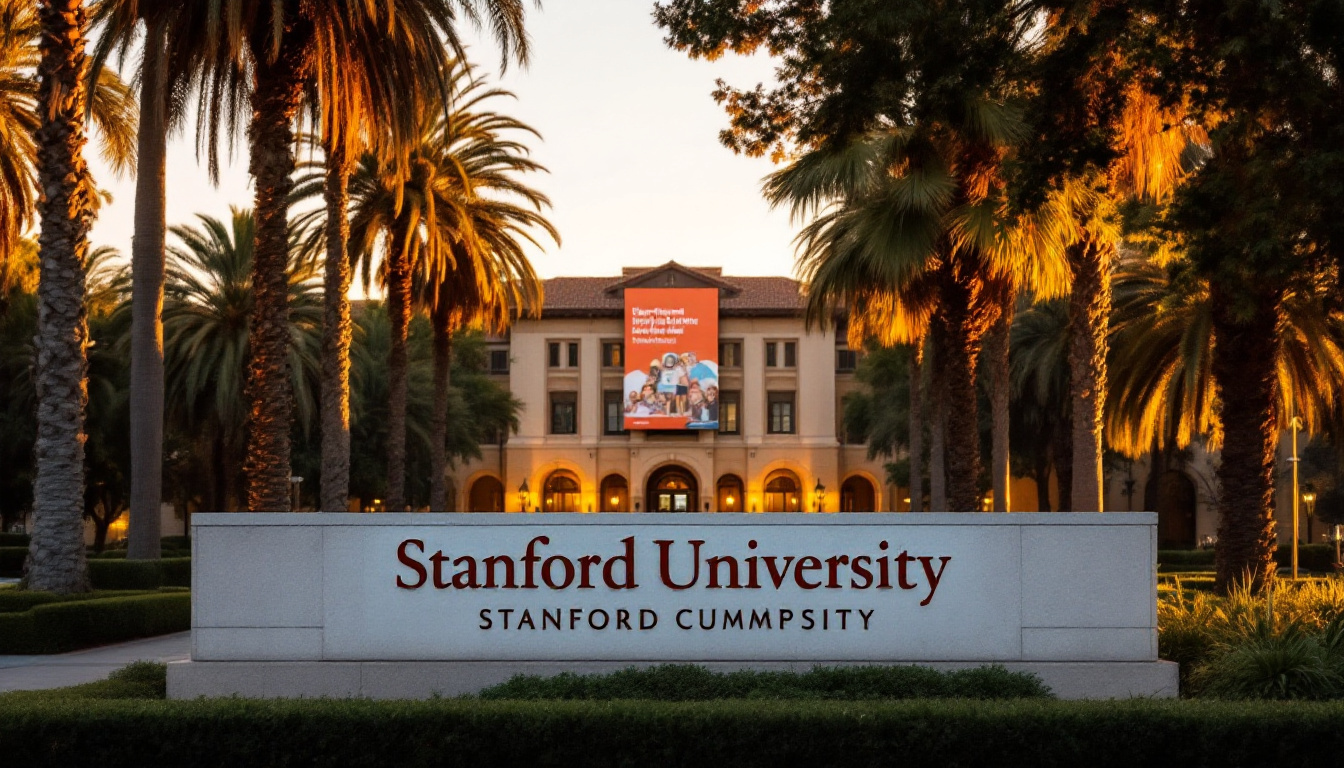
Billy Ramirez, a Stanford University junior in the class of 2027, was driving to campus from his hometown when a friend texted him a side-by-side comparison. In the original photo, Ramirez appeared alongside other students. In Stanford's promotional banner, he was gone — digitally erased and replaced by an AI-generated Black woman.
"Seeing my identity changed and being left out of the picture made me feel, in a way, silenced and erased," Ramirez said. Silenced and erased — by the diversity office.
The Stanford Review, the university's independent conservative student newspaper, broke the story with a headline that needed no editorial enhancement: "Stanford just used AI to race swap a student for their advertisements." The department responsible was Residential & Dining Enterprises, which apparently decided the real student body wasn't diverse enough for the brochure and fired up the AI to fix it.
Ramirez wasn't the only one altered. Two other students in the same photo had their appearances digitally modified — slimmed down by the AI tool. So the same department that would lecture you about body positivity and authentic representation ran real students through a digital filter to make them look different. Three students manipulated in a single image.
"I was driving to school from my hometown when my friend sent me the images comparing the banner to the original photos, and I was immediately baffled," Ramirez told the Stanford Review. Baffled is generous. A university that has built an entire administrative apparatus around inclusion literally cut a Latino student out of a photo and pasted in a computer-generated person of a different race.
Stanford's response was a masterclass in institutional deflection. The university issued a statement confirming that "the use of A.I. in producing or altering images of Stanford people, events, research, facilities or achievements is strictly prohibited." Prohibited — and yet someone in Residential & Dining Enterprises did it anyway, which means either the policy didn't exist before they got caught, or it existed and nobody followed it. Stanford did not apologize.
A prohibited practice that happened anyway and produced no apology. That's not a policy failure. That's a culture telling you what it actually values when nobody's looking. The stated policy says don't alter images. The actual behavior says make the photos match the diversity goals, real students be damned.
The deeper absurdity is structural. Stanford charges over $60,000 a year in tuition. It sits on an endowment north of $30 billion. It has an entire Office of Diversity, Equity, and Inclusion. And after all of that institutional firepower aimed at building a diverse campus, the marketing department still had to fabricate diversity with software. The real campus photo wasn't diverse enough for the diversity university.
Billy Ramirez is a real student who paid real tuition to attend a real university. Stanford's Residential & Dining Enterprises looked at his face and decided an algorithm could do better.