
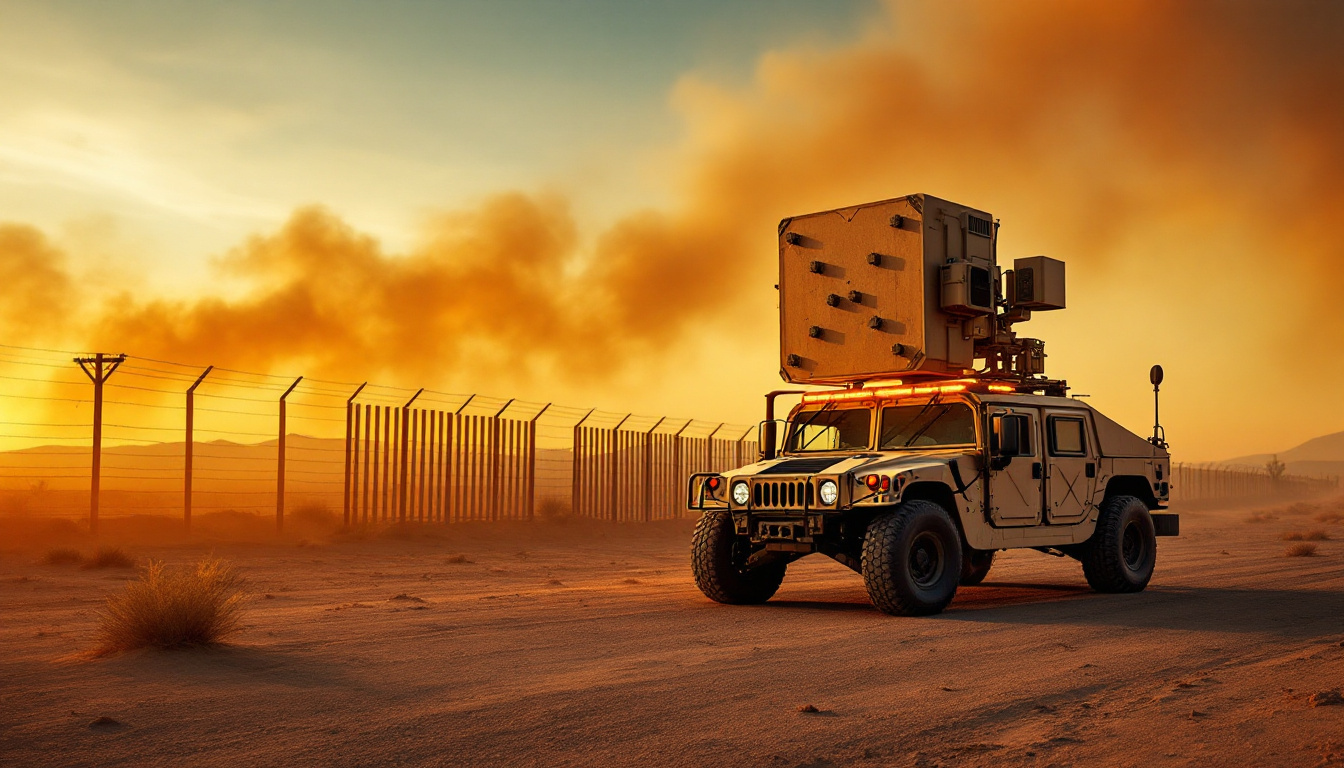
The Pentagon has a weapon that can stop a crowd rushing the border without leaving a mark on anyone. It's been sitting in storage for 16 years.
That's about to change. Defense Secretary Pete Hegseth signed a memo authorizing a "temporary loan" of one Active Denial System to the Department of Homeland Security. Starting in September, DHS gets seven months to test it on the southern border, with the option to ask for more time after that.
The memo is clear about who's in charge. The system "shall not be operated by DoW personnel." DHS alone is responsible for how it's used and for writing the tactics and rules that govern it. Soldiers won't touch it. Border agents will.
The Active Denial System fires an invisible 95-gigahertz beam at targets more than half a mile away. It only goes about 1/64 of an inch into the skin, deep enough to make the surface feel hot and no deeper. The Pentagon compares it to the blast of heat when you open an oven door. It produces what military officials call "an instinctive and irresistible urge to run from the effect."
People step out of the beam, and the heat stops. Nobody is left bleeding or choking.
Its safety record backs that up. According to program officials, the beam hit volunteers more than 11,000 times in testing, and only two of them needed medical attention. Both recovered fully.
Compare that with what Border Patrol agents have now. In November 2018, hundreds of people from a migrant caravan rushed the San Ysidro port of entry near San Diego, and some of them threw rocks at agents. The agents fired tear gas. Tear gas drifts onto anybody nearby, rubber bullets can break bones, and a fight at the fence can end with somebody hurt on either side. The Active Denial System hits only the person standing in front of it.
CBP looked at the beam that same year. Then-Homeland Security Secretary Kirstjen Nielsen shot the idea down weeks before the midterms. Later, Border Patrol's El Centro sector in California studied using it at river crossings under Rodney Scott, who now runs CBP.
Then came the Biden years, when Border Patrol logged more than 2 million encounters at the southern border in a single year.
The Trump administration has brought illegal crossings down to historic lows. CBP says it's "continually evaluating new technology," and this is the next tool for the rare day when a crowd decides to rush the line anyway.
Critics have already started. A former DHS official complained about "treating immigrants and citizens like enemy combatants." Enemy combatants get bullets, though. People in front of this beam feel heat and walk back the way they came. Nobody is forced to stand in it. All it takes to make it stop is turning around.
Some former officials have raised practical questions. One worry is that people near the Rio Grande might run toward the water instead of away from it. Another is whether the beam could reach across into Mexico. Testing exists to work that out, along with where the system goes, who operates it, and the rules for using it. The memo authorizes testing, not deployment.
The Active Denial System went to Afghanistan in 2010 and came home without firing a shot. It's been sitting in storage ever since. Now the Border Patrol has seven months to test it.