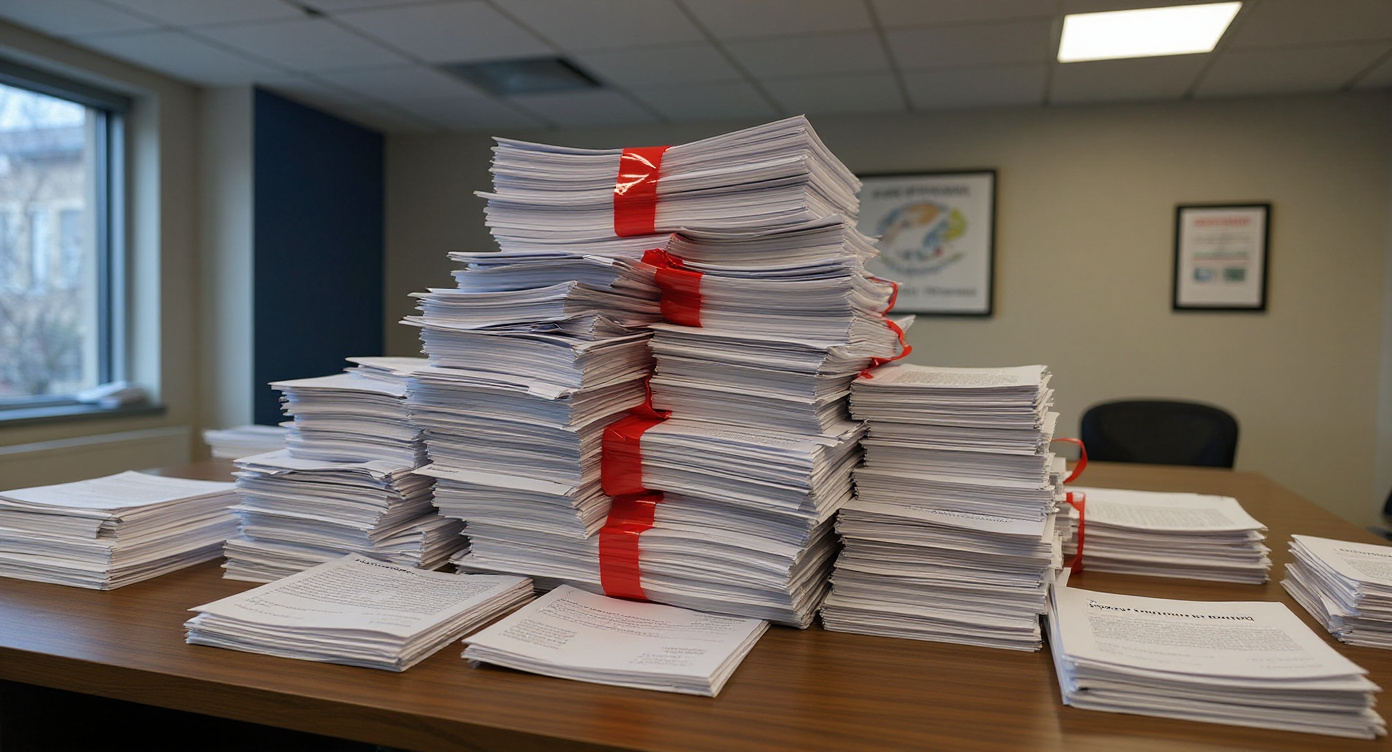
Seven hundred and two. That's the number of federal regulations the Trump administration has targeted for elimination in its fiscal 2026 deregulation plan. The projected savings: $1.5 trillion. Not million. Trillion, with a T.
For context, that's more than the entire annual budget of the Department of Defense.
The plan represents a massive escalation from the administration's fiscal 2025 effort, which targeted 482 deregulatory actions and delivered $211.8 billion in cost savings. The new round adds 220 more regulatory targets and multiplies the projected savings by roughly seven.
Mark Paoletta, the General Counsel performing duties of the OIRA administrator at the Office of Information and Regulatory Affairs, said the effort is aimed at "improving the lives of Americans, and that it promotes economic growth, jobs, and affordability."
The agencies getting the heaviest trim read like a list of Washington's most prolific rule factories. The EPA is reconsidering Biden-era pollution standards for vehicles — regulations that were quietly designed to force an electric vehicle transition whether consumers wanted one or not. The EPA is also moving to repeal carbon pollution standards on fossil fuel power plants, including the Obama-era Endangerment Finding from 2009 that imposed an estimated $1.3 trillion in regulatory burden all by itself.
The USDA is proposing changes to school meal nutrition standards — the ones where federal bureaucrats decided they knew better than parents what American kids should eat. The Labor Department is rethinking contractor classification rules and retirement investment regulations that added compliance costs without adding value.
OIRA's announcement, reported by Fox Business, framed the initiative as "continuing to put America and Americans first." One specific example: the EPA's vehicle standards reconsideration alone is projected to save consumers an average of $2,400 on new vehicles. When the government stops mandating technology most buyers don't want, prices come down. Imagine that.
Critics will argue this is reckless — that regulations exist to protect people and gutting them invites disaster. What needs to be acknowledged is that the federal regulatory code has grown for decades with virtually no mechanism for removing rules that have outlived their purpose, drive prices up for consumers, contradicted newer rules, or never worked in the first place. The question isn't whether regulation is necessary. It's whether 702 specific rules are accomplishing anything other than employing the people who enforce them.
The February 2026 White House announcement that kicked off this round made the administration's theory of the case clear: the regulatory state has become its own economy, generating costs that flow downhill to consumers, small businesses, and workers who never voted for any of it. Every rule has a constituency inside the bureaucracy that fights to preserve it regardless of whether it still serves a public purpose.
The fiscal 2025 round proved the concept — $211.8 billion in documented savings, and the economy didn't collapse. The $1.5 trillion target for fiscal 2026 is the administration betting it can go bigger.
When your barber takes off more than you asked for, that's a problem. When the federal government has been growing the same regulatory hairdo since 1970 and someone finally shows up with clippers, $1.5 trillion is what falls to the floor.