
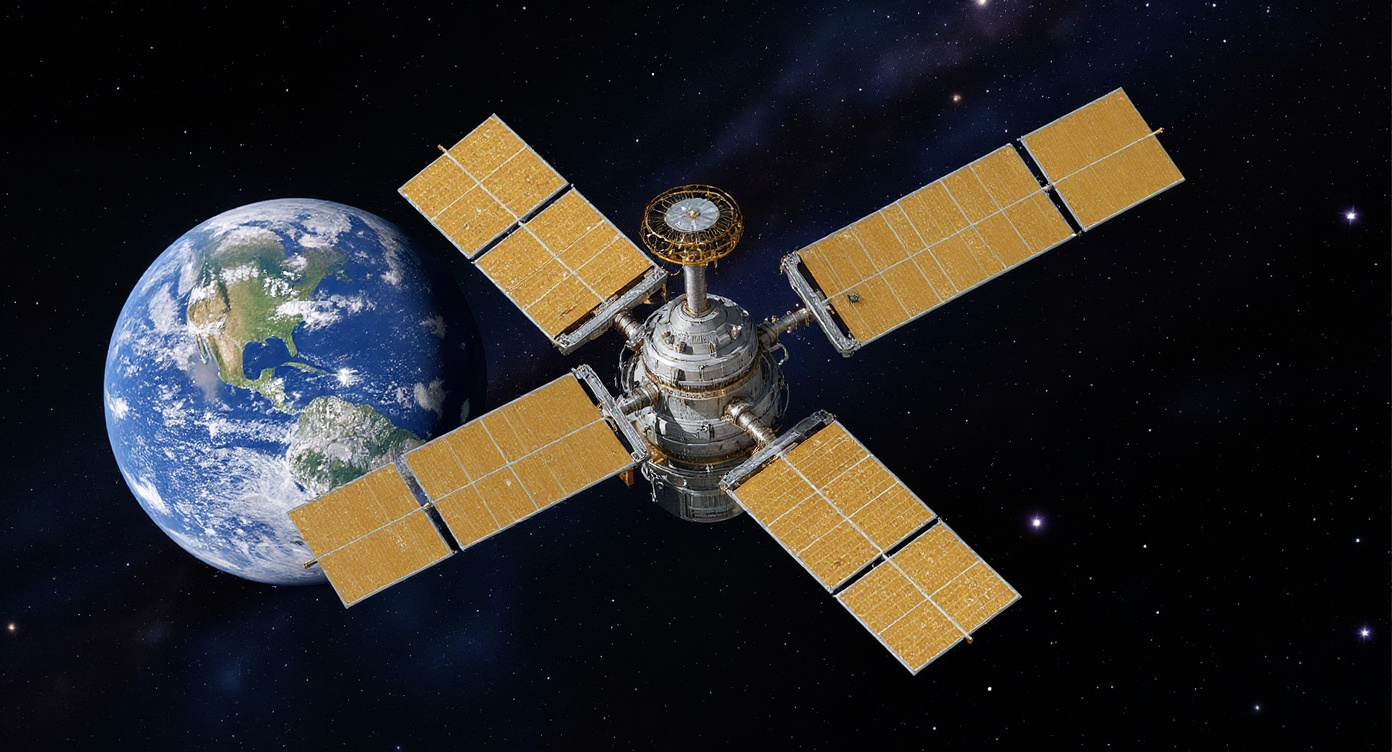
A million miles from Earth, a brand-new American space telescope is settling into position right now — one with a field of view 100 times larger than the Hubble. The Nancy Grace Roman Space Telescope launched on August 30 aboard a SpaceX rocket, and NASA says it will image more of the sky in five years than Hubble managed in thirty.
Somewhere, China's space program just felt a chill.
The Roman Telescope is built for next-generation infrared surveys capable of mapping billions of galaxies. Not millions. Billions. It's the kind of leap that doesn't come along often — a machine so powerful it redefines what astronomers can even ask questions about. And it launched on time, on budget, with an American rocket from an American launchpad.
NASA Administrator Jared Isaacman oversaw the launch, which came just two days after President Trump signed an executive order establishing the U.S. Space Academy — part of a broader push to hit 1,000 or more annual space launches and cement American technological superiority in orbit and beyond.
Trump called into the NASA press conference to mark the occasion. "We're the hottest there is," the President said. "We're the hottest, you're the hottest in space, and we have the hottest country anywhere in the world, so let's keep it all going."
Not exactly Kennedy at Rice University. But then again, Kennedy didn't have a telescope that could outshoot Hubble by a factor of a hundred.
The Roman Telescope represents the kind of tangible, measurable achievement that doesn't require a press secretary to explain. It's sitting a million miles away right now, preparing to do something no instrument in human history has done before. The science is real. The hardware is real. The rocket that carried it was built by an American company and launched from American soil.
The launch is part of Trump's broader space dominance initiative, which has quietly become one of the most productive policy tracks in this administration. While cable news runs another panel on who said what on social media, NASA is rewriting the boundaries of observable space.
The U.S. Space Academy executive order is worth a second look, too. The goal isn't just rockets — it's workforce. Train the next generation of engineers, physicists, and mission specialists so the pipeline doesn't dry up in ten years. It's the kind of long-horizon thinking that rarely gets headlines but determines who leads and who follows.
Critics will point out that space spending doesn't fix potholes or lower grocery prices. Which is true in the same way that saying "buying a tractor doesn't fix your roof" is true — technically correct and completely beside the point. Countries that stop investing in frontier technology don't stay on top. That's not an opinion. That's the last five centuries of recorded history.
The Hubble Space Telescope launched in 1990. For thirty years it was the crown jewel of American space science. The Roman Telescope just made it the warm-up act.
Five years from now, when the Roman's data starts reshaping what we know about dark energy, galaxy formation, and the structure of the universe itself, the arguments about whether space investment was "worth it" will answer themselves.