
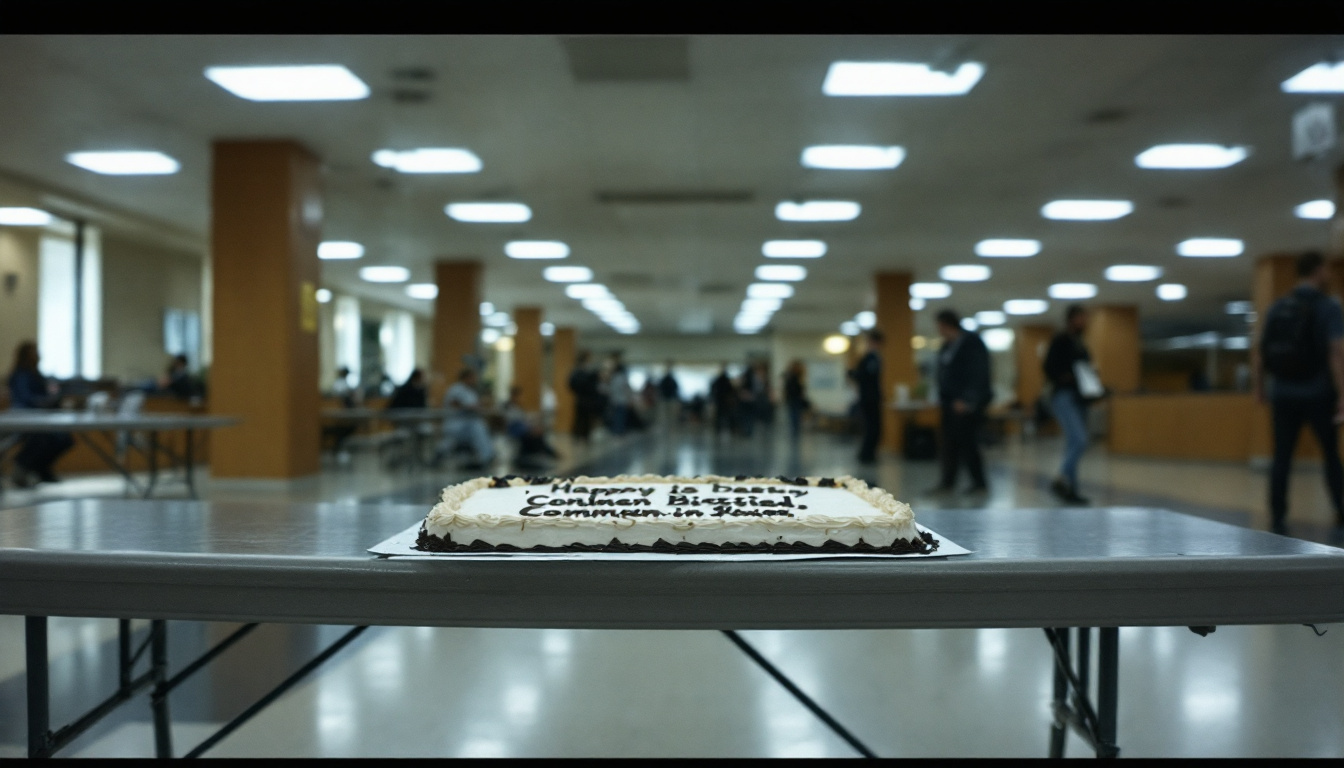
On September 10, a University of Utah student named Sara Larsen walked up to the school's College Republicans chapter carrying a cake. Written across the top in frosting: "Happy Kirkiversary" — a celebration of the assassination of Charlie Kirk one year to the date.
The College Republicans photographed it and posted it online. Now the university wants to expel them for it.
Not Larsen. Not the student who thought baking a cake to commemorate the murder of a conservative public figure was a fun Wednesday afternoon activity. The university's Dean of Students office opened a case against Rylie Barnes, vice president of the College Republicans, and another Republican student — accusing them of "threatening or endangering behavior" for the act of exposing a fellow student's horrific celebration of murder.
An expulsion hearing was reportedly scheduled for 8:30 Pacific time. The charge, again, was not against the person who made the cake. It was against the people who showed the world that the cake existed.
Larsen offered what Barnes described as a phony apology after the photo went viral. The College Republicans accepted it. That should have been the end of it. Instead, the University of Utah College Democrats filed a formal complaint demanding the Republican students be expelled — and the administration obliged by opening proceedings. A counter-protest against the College Republicans was also being organized on campus.
Assistant Attorney General for Civil Rights Harmeet Dhillon responded publicly on X, questioning the university's decision to target the students who documented the incident rather than the one who staged it. When the Department of Justice's top civil rights official is publicly flagging your disciplinary process, the process has a problem.
The university's logic, if you can call it that, runs something like this: photographing offensive conduct and posting it online constitutes a threat. By that standard, every journalist in America is guilty of endangerment every time they publish something uncomfortable. The "threatening or endangering behavior" charge doesn't describe what Barnes did. It describes what the photo did to the university's reputation.
The cake is gone. The expulsion case isn't.